Wednesday, July 31, 2024

The Courage to be Disliked

From the standpoint of teleology, we choose our lives and our lifestyles ourselves. We have the power to do that. The Courage to be Disliked. Ichiro Kishimi and Fumitake Koga.

For a long time I had been thinking that I need to make some new friends. Which is not to say there is anything wrong with my old friends, but I seem to do so many things either just with Doug or by myself. And, it would be nice to have more people to sea kayak with, or join us for rock climbing, bushwalking or even trail run with other people. It is hard to make friends in the modern age, and harder still as you get older, and even harder again (that’s a harder, harder, harder) if you are not like most of the people your own age. That, I think is the rub for me, I’m not very much like the people who live in my region and I – at least at this point in life – am too uncompromising to change to assimilate.


If you are interested in numbers, Eurobodalla is actually the second oldest electorate in NSW! The median age is 54, and over 50% of people living in the region have a long term health condition. I’m fairly confident that most of those health conditions are diseases of civilization caused by poor nutrition and inactivity, but that does not change the fact that – based on the numbers – I’m already in the minority.


I binned the idea of the Sunday paddles after a couple of months. That was hard for me because I don’t like quitting, but, as Seth Godin writes in The Dip, it’s imperative to recognise when to persist and when to stop, and, it really felt like quitting was the best option. The paddles were not meeting my goals and no amount of delusional thinking or continued effort was going to change that.


There are local and semi-local bushwalking groups and, of course, I could join in on some of those walks. The problem is, the walks all read like this “Drive 120 km/walk 7 km.” Admittedly, that is one of the worst drive to walks on the schedule, but most of the others are not a whole lot better and the longest walk is 15 kilometres. There is no getting around how much I would chafe against spending most of the day walking just 15 kilometres. It’s not hubris, because I have no illusions about my ability: I’m old and I’m kinda slow, but I’m not that old and I’m not that slow.


Meeting rock climbers has always been difficult and with no local climbing gym or climbing area, meeting climbers becomes even more difficult, and, of course, no-one wants to hook up with a random when the consequences of error are so profound.


So, for many months, I sat with this dissatisfaction in this one aspect of my life. And then I started reading The Courage To Be Disliked by Ichiro Kishimi and Fumitake Koga. This is a book about Adlerian psychology and focuses on a teleological approach to the human experience rather than etiological explanations. An etiological explanation is a causes b. Or, “I have few friends to do things with because there are not many people in the small community in which I live who like to do the things I like to do.” Teleology, however, explains phenomena in terms of the purpose that they serve rather than the event which caused them. A teleological explanation would be “I have few friends because I like doing unusual things and doing them alone.”


The etiological explanation leaves me with very few options, and is frankly kind of depressing. Conversely, the teleological account opens multiple pathways for change. Any time I decide to become less unusual and more amenable to doing things in a group with other people, I can make new friends. You might argue that nothing really changes except how I am thinking about the problem, but I disagree. Etiologically, I’ve got nowhere to go, teleologically, I have dozens of options.

Monday, July 29, 2024

Kingiman Ridge

Garmin, Strava, and likely most other apps and devices that track your activities also gamify everything. Perhaps a whatever works strategy is good given how difficult it is to motivate modern humans to live as humans not zoo animals. Personally, I don’t need gamification for motivation as every time I do something I think, I wonder if I could go further, farther longer. Doug and I have been riding the new trails on the weekends and every weekend now is a mission to do more distance and elevation gain than the weekend before. I think a good goal is to hit 1000 metres of vertical which we used to consider minimums back in my days skiing with the Kootenay Mountaineering Club (I doubt anyone does minimums in the new old KMC now).


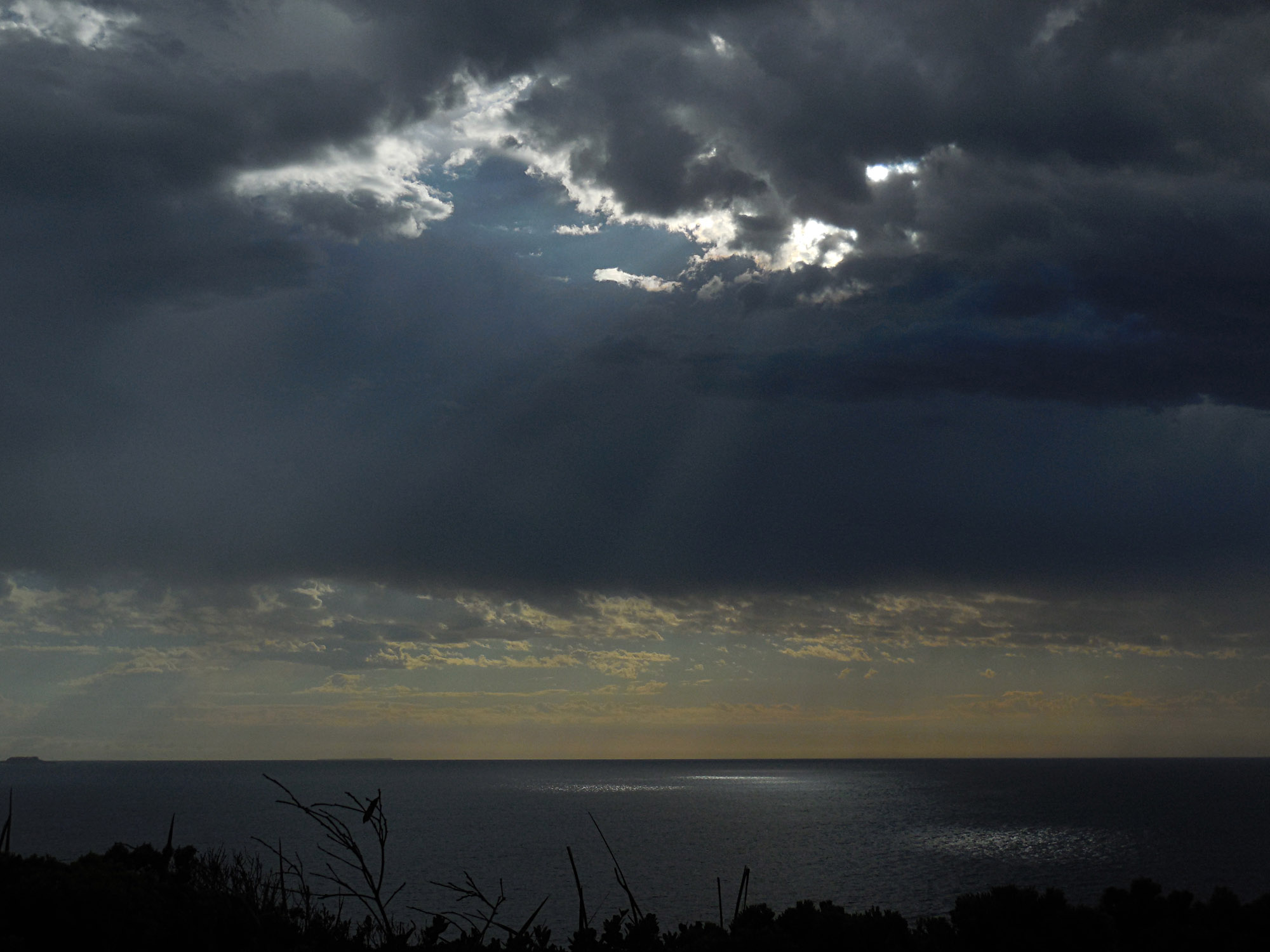
My original plans for Monday were scarpered by strong winds – gale force winds, the ocean was quite a sight to see - so I opted instead for a long run day. My long run days are pretty sporadic, in fact, the last was over a month ago when I jogged around the Durras Mountain circuit on a stormy day. Somehow, by dint of keeping active, I manage to be able to run a reasonable amount “off the couch” although, of course, it’s not really off the couch as I frequently run the local 5 km Park Run and do some type of self-powered activity every day. It’s gratifying, however, to be able to complete a decent distance at zone 2 in a reasonable time anytime I feel like it and not be crippled the next day. That really is the goal of training: to be able to say “I’m in” at a moments notice.


Almost every time I drive to Sydney I think about taking a side trip along Kingiman Ridge on the way back, but, heading south, as I drive through Ulladulla and all I can think about is getting back home. I can, however, drive to Kingiman Road in under an hour from home which put a run along the road well into the acceptable “drive to adventure ratio.” Not sure what condition the road would be in and it being a very, very windy day, I parked right at the junction of Kingiman Road and Woodstock Road and headed off.


The first couple of kilometres to a junction with a road servicing a bunch of properties down near Boyne Creek was a very firm good gravel road, but beyond that junction, the road runs through deep forest with patches of rain forest, ferns and palms in wet areas, and big boulders along the road side. It was a pleasant forest run, even with the howling wind in the trees above, mostly heading north until the road makes a turn to the east and traverses around below the short cliffs of Mount Kingiman.


I thought I might find a bit of a track heading up Mount Kingiman but nothing appeared and as I was dressed for running not bushwacking I passed on the final 100 metre vertical scrub bash to the top and turned about. It’s possible to follow a gated fire trail down to Jindelara Creek, and, if you keep going west you’ll pass Pigeon House Mountain and eventually come out at Yadboro. If you could convince someone to run in the opposite direction, and swap car keys, that would be a good one way trip.

Back at the Princes Highway, I was only about five minutes drive from Ulladulla so I drove out to Warden Head to view the spectacular of the big storm blowing through. As you can see from the photo, the surf breakout would take some power endurance!

Wednesday, July 24, 2024

Styles Creek Camp and Mount Haughton

It’s three years since I last walked into the Budawangs. Well, that’s not quite factual as in 2023 we day walked to the top of Currockbilly Mountain – a highly recommended trip – but the last time we walked into the Budawangs and camped with the intention of hiking to the top of one of the distinctive mesa type mountains was late 2021. The bushfire regrowth on that trip was so bad that I all but gave up for a while on Budawang trips. There’s type 2 fun and fun and there is very little fun about bashing through regrowth at a maximum speed of half a kilometre an hour and not getting a single view all day. Because that is the thing with Budawang mountains, the tops can be as thickly covered as the valleys holding entire multi-level ecosystems of vegetation and even dense swamps.


Small waterfall off Mount Haughton

However, with some unexpected but welcome news of track clearing between The Vines area and the northern base of Mount Haughton, we decided to walk in again with hopes of getting up a peak or even two. Two would be be greedy and I’ve learnt not to expect to satisfy such rapacity in the Budawangs. Sometimes a successful trip is merely getting in and out without ripping your gear to shreds or being lost in scrub for hours.


The view from the head of Styles Plains


Our plan was to walk in and camp at Styles Creek on the first day, take the second day for “peak bagging” and walk out again on the third day. If you look at the map, this sort of trip should be quite possible in a single overnight trip as neither the distance nor the elevation gain is great but that is where I have gone wrong a dozen times in the past. Distance and elevation gain mean nothing when you are pushing through dense scrub.


Quiltys Mountain from Styles Creek


Multiple old tracks converge on Styles valley: from the north and west via Round Mountain Fire Trail (FT), from the south via Mount Tarn, and from the north via either the Endrick River FT or the Red Ground track. On this visit, we came in from the Endrick River FT and Sassafras, a straight forward but somewhat foot-sore walk as large rocks have been deposited on the FT and these make for weary and hard walking. It may be that some people prefer the Red Ground access which is slightly longer (a couple of kilometres) but the track softer underfoot.


Sturgiss from the base of Haughton


In any event, apart from the hard rock of the Endrick River FT, the walk is straight forward enough and we stopped for a lunch break at Camp Rock. It was windy day and we had walked all this way in synthetic puff jackets! After lunch, we descended down to the rainforest near The Vines where it seems darker than ever under a dense canopy. A short distance further along, the track is well cleared as it heads southwest into Kilpatrick Creek. The next couple of kilometres is tedious walking as there is prolific blow down across the track necessitating scrambling up, over, and under large trees which have fallen across the track. There is little sign of any clearing and this section did not seem much better than our last trip along here.


Pass onto Mount Haughton


Eventually, however, the track climbs out of the creek along a boggy section and a roughly cleared track leads south to the Hidden Valley track. Walking along this slashed passage way, you get a sense for the density of the regrowth as the vegetation beside the track is dense as a wall. In 2021, this is where we spent a couple of hours thrashing around trying to find any remnant track at all. Now, apart from a few odd jogs in the track, the way is clear, but the walking is not quick as the cleared brush is simply dropped onto the track. Hidden Valley track, however, is obvious and soon enough the cleared track sidled down easily to a wonderful campsite at Styles Creek. There are a number of flat tent sites, a sitting area with a few log bench seats and views to Mount Haugton and Hoddles Castle Hill, the south end of Quiltys Mountain and the looming bulk of Mount Sturgiss. Apart from the incessant wind, it was one of the nicest – if not the best – campsites I’ve had in the Budawangs.


Camp at Styles Creek


It was long past time for a big mug of tea and boiling water to soak dinner. We wandered about a bit before dark and I even entertained the idea of trying to find Styles Cave but with the short days of mid-winter there was not sufficient time.


Styles Cave is up there somewhere


The next morning, after a very long time in the tent, I fetched water in a pot and crawled back into tent and sleeping bag to make a big jug of coffee for Doug and myself. Before 7:30 am, we were ready to set off following a defined track east towards the south end of Sturgiss Mountain. In a disappointingly short period of time, we came to what seemed to be the end of the track and I contemplated more bushwacking than originally intended, but, a little searching around and we located the track where it jogged east and passed close by Pagoda Rocks before crossing the head of the valley. I had seen reports of a very boggy track across the Styles Plains in years past, so Doug and I were carrying plastic “holey soles” to walk the track if it was sodden in order to keep our shoes dry. It turned out that we only needed to put these on for a short section where the track crossed a deeper channel and was sodden for perhaps 100 metres.


Walking towards Mount Sturgiss

A mostly well slashed track climbed up to the base of Mount Haughton and a large camping cave. These always seems so dusty to me and I never realise the appeal, unless of course the rain is pitching down. We left our holey soles on a rock at the base of Mount Haughton and continued on a beaten pad around the east and then south side of the mesa. This is the standard Budawang track, up and down staying as close to the base of the cliffs as possible. At a couple of locations we were diverted upwards scrambling through small passes but these led only into thick scrub in passages between pagodas.


Caves at the base of Mount Haughton


About half way along the south side of Mount Haughton, the cliffs break down and we found a pass between low cliffs up onto the plateau. Burnt and twisted low trees were still pretty thick but we were able to weave through them heading almost due west to where the map indicates the high point lies. Quickly we reached a band of swampy ground and extreme regrowth which we took turns pushing a path through – the kind of vegetation that you must fling your entire body at to make passage. Luckily, there was not too much of this and we exited to the left in more open bush below a second band of cliffs. Travelling north, we soon found a ledge system of ironstone plates which we quickly scrambled up to reach mostly open slabs and what I presume is the top of Mount Haughton.


Thick vegetation on the plateau of Mount Haughton

I presume, but I’m not sure. The latest topographic map has a error with a dark contour (marked 900 metres) to the west of the 877 metre spot elevation. There is no such thing as from the spot elevation, the ground slopes down towards Mount Hoddle. It was very windy on top so we scuttled about until we found a sheltered location looking off into Hollands Gorge which is almost 700 metres below. From our location, there was a maze like system of pagodas to the north. It is possible that a higher point lies that way, but if that is true (the map is little help), the elevation difference would be a matter of a few metres at most. Thick scrub lies throughout this myriad of pagodas and finding a way through and up would be the work of many, many hours.


Pagodas on Mount Haughton


We had lunch and pondered the possibility of ascending either Mount Hoddle or Hoddles Castle Hill but were disabused of that notion when we noted the amount of scrub between us and either of those locations. Returning to camp was much quicker as we avoided all the detours up possible passes and only rested for a short time under a big roof at the last camping cave on Mount Haughton. Back at camp, I made big mugs of tea and then followed a westward trending branch of the track across into Styles plains. This was reasonably clear for a distance but I suspect that the northern end on the east side of Fosters Mountain could be a different story. We had intersected this track close to its junction with Round Mountain FT in 2021 and the track was buried deep in acacia regrowth.


Sunset over Hoddles Castle Hill


We had another long night in the tent, although the wind did drop but clear skies brought frost overnight so next morning I repeated my winter camping ritual of getting up for a pot of water and then returning to bed for a mug of coffee. The walk out was slightly better than expected as we did the annoying rumba over and under the blow down along Kilpatrick Creek in the morning while fresh rather than in the afternoon. The rocky road out, however, was hard on the feet and it was nice to reach the car after about five hours walking.


Hollands Gorge

Thursday, July 18, 2024

Manifesting Your Destiny is Opium

I’m not one for self help books although over the years I’ve certainly read a lot of them. Most of the mystic-guru-manifest-your-destiny-learn-to-love-yourself books are predominantly opiate for people who want to feel better about themselves without doing the hard work of change. With that said, however, human physiology and psychology should be taught in all the schools so that we could learn why we are really doing what we are doing which isn’t anything like why we think we are doing what we are doing and is primarily driven by the biology of dopamine and not rational thinking.


Only infrequently do I get non-fiction books from my local library system although I often browse the shelves. It’s almost always a disappointment as I feel like the offerings are there to brainwash me into a state of toxic victim-hood. The worst subjugation of all is being convinced that you are a victim because victim-hood removes any and all personal agency and renders you powerless. That’s a terrible state to be in. With all that said, I just read Anna Lembke’s book Dopamine Nation: Finding Balance in the Age ofIndulgence and it is well worth a read, particularly if you do not understand how dopamine affects every facet of our lives.


Right now I’m reading Gretchen Rubin’s book The Four Tendencies. This is less scientific than Lembke’s book but it is an interesting read and another window into why we do what we do. Rubin, of course, is mostly known for The Happiness Project. I’m not sure if that book made anyone any happier because as Rubin writes in The Four Tendencies, her own inclination (upholder) made it relatively easy for her to follow through on her goals and plans. You can take a short quiz – reminiscent of quizzes of old which used to appear in every issue of every women's magazine world wide – here and see what your tendencies are. Apparently, three million people have taken the quiz so it is plausible that Rubin has one of the best validated measures of psychological tendency around given that most psycho-social assessment tools are validated on college students.


The results may have some utility. It’s no surprise to me, or anyone who really knows me, that I ranked as a mixture of upholder and questioner. I’m not good with societal rules and regulations and never met a Standard Operating Procedure (SOP) I did not want to burn on sight, but, I can and do adhere to my own standards with almost regimented rigour. Most of us know ourselves well enough that we don’t need a quiz to reveal our tendencies to us, but, it’s instructive (or at least it was instructive to me) to be reminded that other people have way different tendencies and this is possibly the cause of some of the inevitable friction that occurs in all human relationships.


It’s long been my contention that we all have our own “things.” Annoying habits - tendencies if you will - and personality quirks that make all of us at least a bit difficult (maybe a lot difficult in certain situations), and I try my darndest to let all that shit go. Not one of us is anywhere near perfect yet we must rub along together. There’s knowing and knowing, as they say, and while it’s good to intellectually know this stuff, a little reminder that we are wildly different and what I might find easy others might find difficult just makes letting all that shit go that bit easier.

Sunday, July 14, 2024

Done Clean

This is me, not literally but certainly figuratively, only a travel schedule has not forced me to adapt my training. On Thursday I was pretty burned from Wednesday’s hard route climbing, but I only train strength twice weekly and am loathe to let any of those days slip away. For some utterly bizaare reason, I trained power instead by doing a lot of bodyweight plyometric exercises interspersed with some kettlebell swings and core work. I only do plyometrics every month or so which means DOMS is virtually guaranteed. Maybe I need to feel pain to find pleasure.


Friday I took my old Scarpa Rockette’s out bouldering in the bush. These are my absolute favourite rock shoes of all time but it’s been years – a decade or more – since you could buy them. Doesn’t that always seem the way under capitalism? Some great product comes along but the engineers and marketers tweak the product until it is just slightly worse than what came before. One of my friends was an engineer and used to say that engineers took a perfectly good product and tried to make it better until it was undeniably worse.


On Saturday, Doug and I rode the trails. I swear it was one of those days when the uphill seems to far exceed the downhill. Twelve kilometres and only half way through the day and we had done only one short descent, the rest was uphill, or at least that’s what my legs thought. Of course, in the end, as we rode a circuit, the elevation gain had to equal the loss but mountain biking after “leg day” guarantees fatigue.


There was frost about this morning, but it was a glorious day, the stunning winter weather continues. Doug and I went climbing and I was within a hairs breadth (or one foot that blew) of sending another project! There was a slightly painful slither down a slab, I’m sure glad it was winter and I was wearing long pants, but I got back on and finished the route but it’s not done until it’s done clean.

Wednesday, July 10, 2024

Try Hard, Don't Sag

You don’t have to be a rock climber to enjoy this video from the Wide Boyz. The thing I most like about it is how fffffing hard Tom tries. The effort is written in every straining sinew. Trying hard is a real and under-appreciated skill. It’s so much easier just to give 50% or 70% effort and comfort yourself by saying “Yeah, I tried hard.” If you are goal driven, dogging on the rope, falling off, and even climbing the route clean but not smoothly can all feel like a terrible failure, and failure is emotionally painful. It is easier to attempt routes that “fit your style” (as folk say) and can be climbed with relative ease. But, the only way to get better at climbing is to try hard routes. And the only way to keep trying hard routes is to rewrite your dopamine circuits so that trying hard is the reward.


It’s pretty much (unless you are looking at a terrible pendulum) impossible to get seriously injured on a top-rope but I still find myself sagging onto the rope rather than falling off because, despite trying hard, I did not complete the move. I’m working at it, but it takes hundreds, perhaps thousands, of repetitions to over-write the engrained “sag” neural wiring. One can only hope that I can erase the sag reflex with half as many try hard reflexes else I’ll be climbing the walls of the care facility I’m living in when I’m 97 (should I make it that far) trying to remember to try hard and not sag.

Sunday, July 7, 2024

Chasing Dopamine

Dopamine, the misunderstood but ubiquitous hormone which is over-stimulated in the modern environment and the cause of both life enhancing and self-destructive behaviours. In one way or another we are all chasing dopamine, whether the outcome is positive or negative depends on where that dopamine reward comes from. But reward is the wrong term to use when talking about dopamine. Most people think of dopamine as a “liking” hormone, something associated with enjoyment, and, in a way, it is, but the more important role of dopamine is as a “wanting” hormone. Each “hit” of dopamine wires reward circuits in the brain and, in effect, says “that was good, do it again.” Maybe that is good if your “do it again” is “go for a long run in the forest,” but if your do it again is, as is more often the case, “eat another piece of black forest cake” (see what I did there – linked forest and forest), you might find yourself in trouble.


PC: DB


I’ve always thought my ascetic principles were just a natural off-shoot of my not very average personality. Both Doug and I enjoy doing without or strictly limiting things that the average person deems a necessity in the modern world: the piece of cake, muffin, or biscuit with morning coffee or as a reward for exercise (about the silliest idea anyone has ever come up with), heat in the house in winter, a glass or seven of alcohol daily, celebrating notable events with food, buying the new latest toy, joining the trendiest gym in town, getting the most likes on a social media platform, or, even worse, arguing with strangers on the same platforms.


For many people, this existence seems joyless and dull, but, I’ve always thought that the greatest joy in life comes from being freed from behavioural drives that over the long term lessen my quality of life. In this way, it has been a conscious decision to chase dopamine – and we all chase dopamine – from things that I consider life enhancing instead of detracting. That means my dopamine hits come from doing things that I find difficult, from things as small as going paddling on rainy cold days in winter because I’ve made a commitment to that, to engaging in activities/sports that are challenging mentally and physically – like paddling the west and south coast of Tasmania, or leading rock climbs that push my limits.


PC: HM


How can these things which, in the moment range from mildly uncomfortable to paralyzingly scary trigger dopamine release? Well, it turns out that:

Female rats housed for three months in a diverse, novel and stimulating environment show a proliferation of dopamine-rich synapses in the brain’s reward pathway compared to rats housed in standard laboratory cages. The brain changes that occur in response to a stimulating and novel environment are similar to those seen with high-dopamine (addictive) drugs.1

I know, humans are not rats, but, reward circuits in rats and humans are scarily congruent. How else do you explain the person who is morbidly obese and yet continues to eat and eat and eat even as their functioning as a human being is reduced to such an extent that even basic activities of daily living (showering, leaving the house) become impossible? This is an addictive response to dopamine, and, the longer it is reinforced the more intractable becomes the wiring until changing the behaviour is well nigh impossible.


PC: DB


It turns out, that, in my obsessive desire for novelty, I have been wiring in dopamine reward pathways similar to those generated by more destructive habits. It’s always been frustrating to me that it is hard to meet like minded people: that is, folks who share an, at times, obsessive need to go further, go faster, or simply go different. It’s likely that this is explained by dopamine wiring. I’m wired to find novelty and challenge rewarding and the average person is wired to find chocolate cake at the end of a familiar bicycle ride that they have done 50 times rewarding. There’s no judgement here. I’m increasingly libertarian these days, wearied by the terminally nervous legislating what is reasonable to do (while they sit on their arses eating chocolate cake washed down with a litre of grog – socially acceptable ways to shorten your life and health span). You get to choose your poison reward; but you should choose with full knowledge of the implications of that choice.

1Dr. Anna Lembke, Dopamine Nation: Finding Balance in the Age of Indulgence.